
Gear Calibration
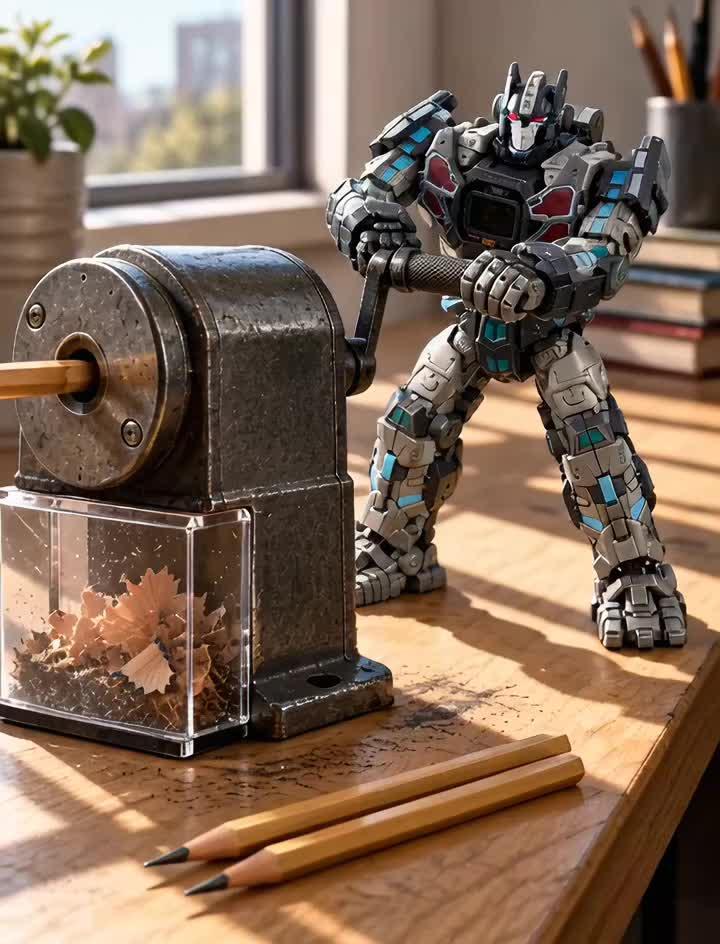
I mounted the maple surface of the study desk. Step one: identify irregular friction. An antique metal hand-crank pencil sharpener sat bolted to the edge, its chrome handle locked at an awkward thirty-degree incline. Step two: evaluate mechanical torque. I grasped the knurled crank handle with both palms and applied steady downward pressure. The internal rotary blades ground against a lodged fragment of cedar wood with a dry squeak, resisting forward drive. I held the handle firm, reversed rotation by four degrees, and heard a clean metallic snap as the wood splinter dropped into the transparent shaving tray below. Step three: verify free revolution. With a continuous sweep of my forearm, I spun the crank through a full 360-degree rotation. The twin helical steel cutters whirred in smooth, synchronized unison, matching the steady cadence in my chest display. Rotational efficiency restored.